Hair loss treatment using stem cell secretome
Hair loss treatment using stem cell secretome is a regenerative approach that utilizes the “secretions” or conditioned medium derived from stem cells (particularly mesenchymal stem cells or adipose‑derived stem cells / ADSC) to stimulate hair growth and reduce shedding.
5/10/20262 min read
Hair loss treatment using stem cell secretome is a regenerative approach that utilizes the “secretions” or conditioned medium derived from stem cells (particularly mesenchymal stem cells or adipose‑derived stem cells / ADSC) to stimulate hair growth and reduce shedding.
What is stem cell secretome?
Secretome refers to a mixture of proteins, growth factors, cytokines, and bioactive molecules released by stem cells (not the stem cells themselves that are injected).
In the context of hair, this secretome is often called conditioned medium (CM) or ADSC‑CM, which is rich in growth factors such as VEGF, IGF‑1, FGF, and HGF that play a role in follicle regeneration.
Mechanism of action in hair loss
Secretome stimulates dermal papilla cells (DPCs) at the base of the hair follicle, thereby prolonging the anagen phase (active growth phase) and reducing transition to the telogen phase (shedding phase).
Other mechanisms include:
Enhancing blood perfusion and vascularization of the scalp.
Reducing inflammation and apoptosis (cell death) within hair follicles, particularly in alopecia areata and androgenetic alopecia.
Route and treatment protocol
The product is typically administered via subcutaneous injections into the scalp, once every 1–2 weeks for 4–6 sessions, followed by periodic maintenance sessions according to the patient’s response.
It is sometimes combined with microneedling or PRP to deepen secretome penetration and further enhance follicle stimulation.
Efficacy and clinical evidence
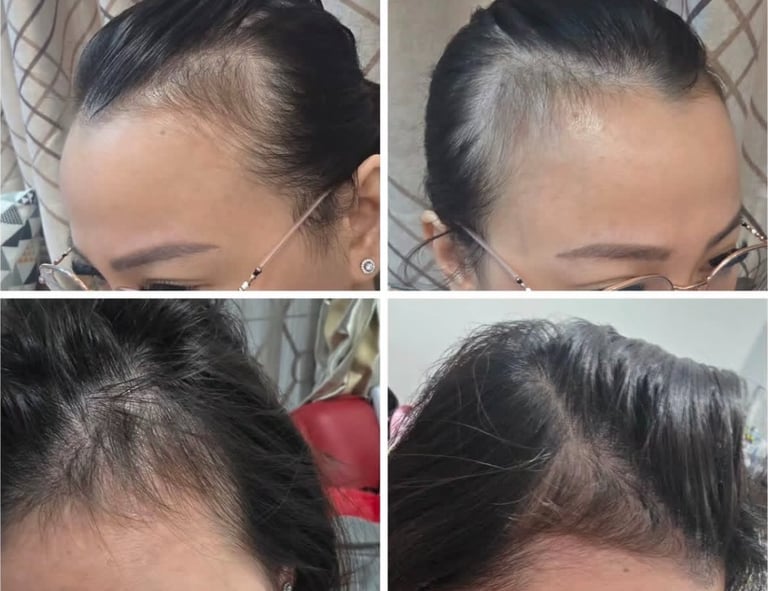
Small clinical studies have shown an increase in hair density of up to approximately 40–50% after several series of ADSC conditioned‑medium injections in patients with alopecia.
Secretome mainly demonstrates effects on:
Androgenetic alopecia (male/female pattern baldness).
Alopecia areata associated with stress or inflammation.
Advantages and safety
It is safer than stem‑cell transplantation, as it does not involve the injection of live cells, thereby reducing the risk of abnormal tissue formation.
Common reactions include redness, mild pain, and local swelling after injection, which usually resolve within 1–2 days.
Ideal indications for aesthetic clinics
Men and women with:
Excessive shedding, thinning hair, receding hairline, or hair loss due to stress, postpartum changes, or hormonal fluctuations.
This treatment can also be used as an adjunctive therapy for patients already using minoxidil/finasteride or preparing for hair transplantation, in order to strengthen hair follicles and improve procedural outcomes.